
イベント
Events
前橋国際芸術祭2026ダイアローグ・セッション「めぶく。」の先の風景を探して
Maebashi Biennale 2026 Dialogue SessionExploring the Landscape Beyond “Mebuku.”
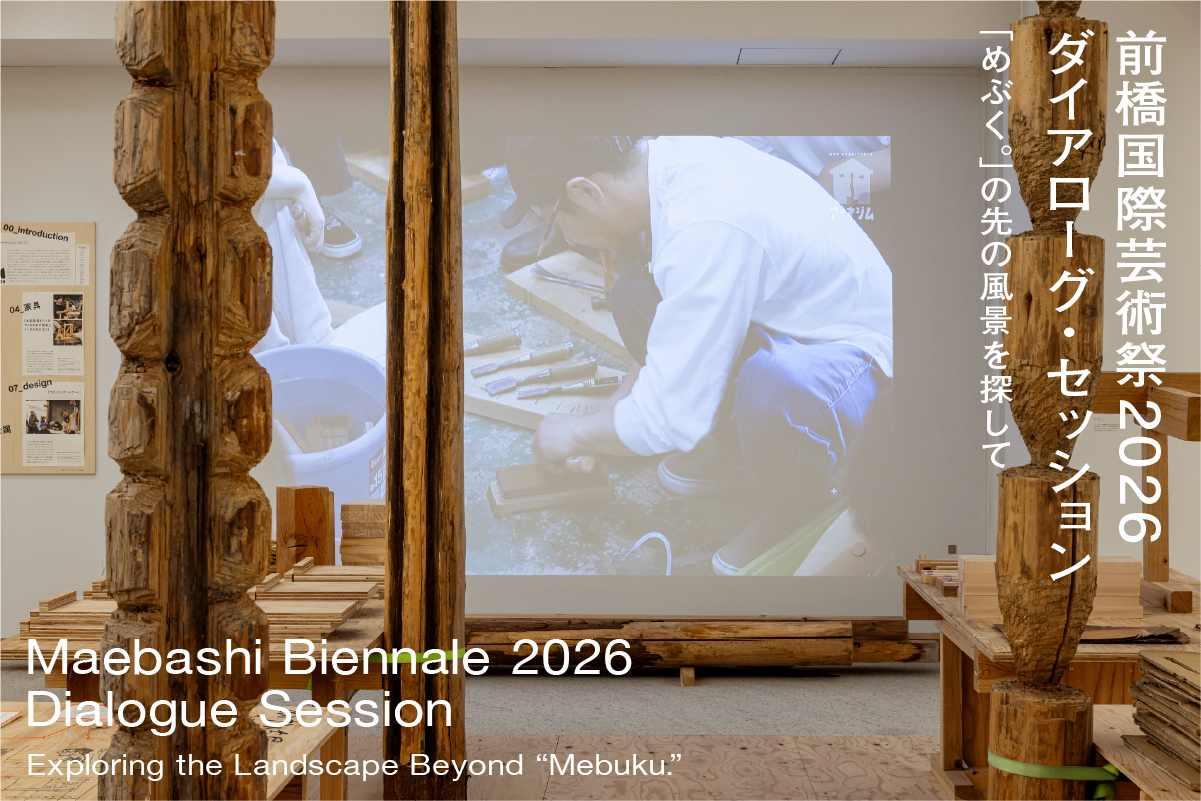
まちづくりビジョン「めぶく。」策定から10年。前橋では、街の再出発の希望を描く建築が次々に生まれ、街の人々の活動とともにその再生をドライブしてきました。芸術祭が始動する2026年は、ビジョン策定から10年を迎える節目の年となります。
既にハード面が整いつつあるこの街において、前橋らしさを発揮しながら、地域や他の場所との関係性を育て、次の再生の物語へと歩みを進めていくために、いま何が求められているのでしょうか。
本トークでは、そのインスピレーションを前橋の外で活動する人々の実践に触れながら見つめていきます。ドットアーキテクツが街の人々とともに作り上げる集いの空間の中で、それぞれの地域にある文化や価値、実践者のまなざしに目を向けながら、この場所から次の風景をひらく手がかりを探ります。
Ten years have passed since the formulation of Mebuku, the urban development vision for Maebashi. Since then, buildings that express the hope of a new urban beginning have appeared one after another, providing momentum towards the re-invigoration of the city and activities of its people. The launch of this art festival in 2026 marks this ten-year milestone. But now, with the physical infrastructure in place, how do we showcase Maebashi’s distinct character, build relationships with surrounding regions and other locales, and transition to the next chapter of redevelopment? Maebashi Biennale 2026 Open Dialogue is a talk program that seeks possible answers to these questions in the practices of people working outside Maebashi. Within a gathering space created by dot architects together with local residents, the program looks at cultures, values, and perspectives rooted in different regions for clues about new territories to pioneer from this space.
開催概要
- 会場
アーツ前橋(ギャラリー2)
- 日程
9/19(土) 家成俊勝
10/3(土) 長坂常
10/18(日) 古川理沙、水野大二郎
11/15(土) 宮崎晃吉、瀬川翠
11/28(土) レオナルド・バルトロメウス
12/6(日) 藤村龍至、辻琢磨
12/19(土) 田中仁、宮本武典、高橋由佳- 時間
14:00~15:30(開場13:45)
- 定員
50名(予約不要)
- 料金
前橋国際芸術祭2026パスポートチケットをご提示ください。
- 企画・構成
高橋由佳(アーツ前橋学芸員)
- 協力
ドットアーキテクト
プログラム Program
9.19[Sat]14:00~15:10
セッション1「都市の中で〈つくる身体〉を取り戻すために」
家成俊勝(ドットアーキテクツ) × 聞き手:高橋由佳(アーツ前橋学芸員)
「誰かがつくったもの」に囲まれて暮らす都市生活のなかで、私たちはどのように自分の手でものをつくり、自分なりに場所を使う感覚を取り戻すことができるのでしょうか。建築家ユニット・ドットアーキテクツは、その問いについて、さまざまな人々との協働を通して考え続けています。セッション1では、大阪・北加賀屋を拠点にドットアーキテクツが積み重ねてきた〈つくる身体〉を取り戻すための実践を見つめながら、前橋での展開可能性も含めて考えていきます。
Dialogue Session 1
Regaining the “Creating Body” in the City
Toshikatsu Ienari (dot architects) × Interviewer: Yuka Takahashi (Curator, Arts Maebashi)
Toshikatsu Ienari (dot architects) × Interviewer: Yuka Takahashi (Curator, Arts Maebashi)
In urban life, surrounded by “things made by others,” how can we reclaim the sense of creating things with our own hands and of using space in our own way? These are the questions that the architectural unit dot architects has continued to explore through collaborations with various people. Session 1 examines the practices pursued over the years by dot architects, based in Kitakagaya, aimed at reclaiming the “creating body,” and the possibility of Maebashi adopting similar approaches.
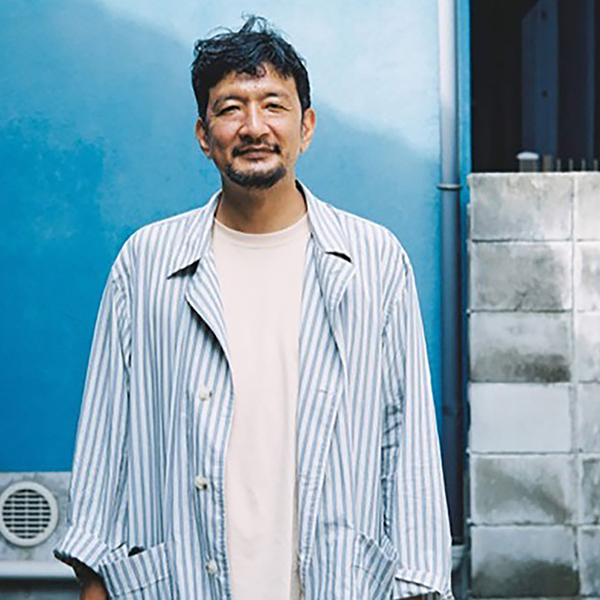
ドットアーキテクツ(dot architects)
2004年に設立された建築家ユニット。大阪・北加賀屋にて、「もうひとつの社会を実践するための協働スタジオ」コーポ北加賀屋を拠点に活動。設計、施工のプロセスにおいて専門家・非専門家に関わらず様々な人との協働を実践している。設計だけに留まらず、現場施工、リサーチプロジェクト、アートプロジェクトなど様々な企画にもかかわる。現在のメンバーは家成俊勝、赤代武志、土井亘、池田藍、宮地敬子、勝部涼亮、小林明日香、倉橋風人の8名。主な作品に「Umaki camp」(2013, 香川)、「千鳥文化」(2017, 大阪)、「仮の家」(2022, 静岡)などがある。
dot architects
dot architects is an architectural unit founded in 2004. Based in Kitakagaya district, Osaka, the group operates from Kopo Kitakagaya, a collaborative studio dedicated to practicing an alternative form of society. Their practice involves collaboration with a wide range of participants in the processes of design and construction, including both specialists and non-specialists. Their activities extend beyond architectural design to on-site construction, research projects, and art projects. The current members are Toshikatsu Ienari, Takeshi Akashiro, Wataru Doi, Ai Ikeda, Keiko Miyachi, Ryosuke Katsube, Asuka Kobayashi, and Futo Kurahashi. Major works include “Umaki Camp,” Kagawa (2013); “Chidori-Bunka,” Osaka (2017); and “Kari no ie” (On-hold House), Shizuoka (2022).
10.3[Sat]14:00~15:10
セッション2「小さなスケールからはじまる都市の更新」
長坂常(建築家) × 聞き手:高橋由佳(アーツ前橋学芸員)
尾道の《LLOVE HOUSE》や豊島の《Teshima Factory》をはじめ、銭湯や立ち呑み屋、カフェなど、人々がカジュアルに集う場を数多く手がけてきた長坂常。家具から建築、まちづくりにまでわたる自身の実践を〈半建築〉と捉え、都市レベルでも大規模な計画ではなく〈セミパブリックスペース〉を一つひとつ丁寧に設計することで、人々のふるまいが解放される場を生み出してきました。さらに韓国・済州島では、点在する小さな空間の変化の積み重ねによって都市の風景を更新する〈見えない開発〉を実践しています。セッション2では、こうした小さなスケールから都市を変えていく実践を通して、従来型の方法に限らない都市開発の可能性について考えます。
Dialogue Session 2
Revitalization of Cities Starting on a Small Scale
Jo Nagasaka (Architect) × Interviewer: Yuka Takahashi (Curator, Arts Maebashi)
Jo Nagasaka has designed many casual gathering places such LLOVE HOUSE in Onomichi, Teshima Factory on Teshima Island, along with various public bathhouses, standing bars, and cafés. He calls his practice, which spans furniture, architecture, and urban planning, “semi-architecture.” Even on an urban level, he eschews large-scale projects, putting his focus on meticulously designed semi-public spaces―created one at a time―that liberate people’s behavior. Additionally, on Jeju Island, he practices “invisible development,” which is the renewal of urban landscapes through accumulated changes made to small, scattered spaces. In this session, we explore his unconventional approach to urban development that starts with small-scale interventions.
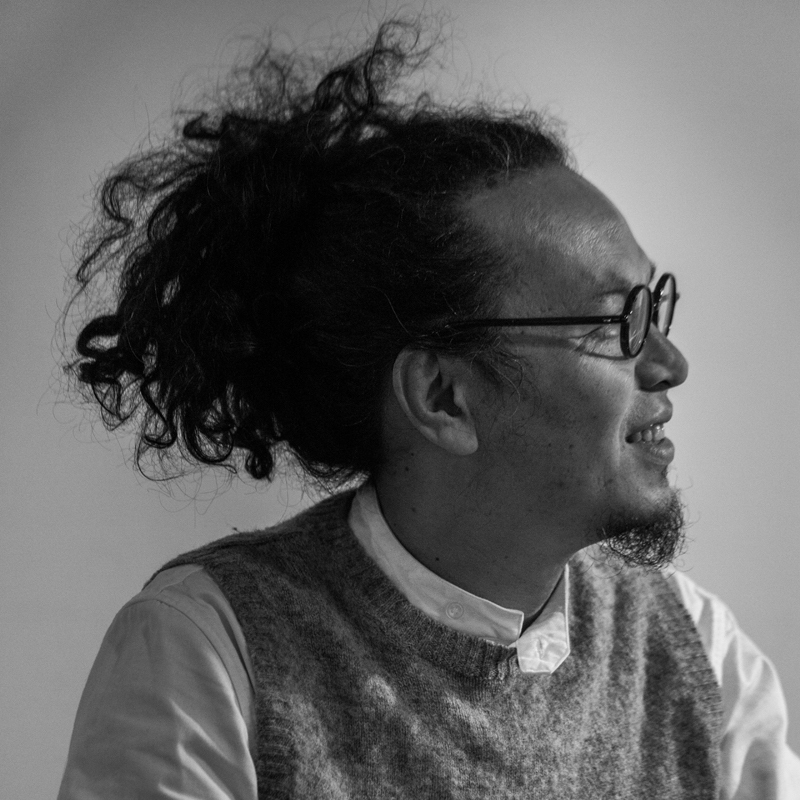
長坂常/スキーマ建築計画
1998年東京藝術大学卒業後にスタジオを設立。日常にあるもの、既存の環境の中に新たな価値を見出し、家具から建築、まちづくりまで幅広く活動する。近年では各地で地域活性のプロジェクトにも多く携わる。近作に狛江湯(2023年)、50 Norman(2022/25年)、Teshima Factory(2025年)、著書に『半建築』(2022年)など。
Schemata Architects / Jo Nagasaka
Jo Nagasaka founded a studio in 1998, following graduation from Tokyo University of the Arts. He finds new value in everyday objects and existing environments, working across a wide range of fields from furniture to architecture to town planning, and has in recent years been involved in numerous regional revitalization projects across Japan. Recent works include Komaeyu (2023), 50 Norman (2022/25), and Teshima Factory (2025). Publications include Semi-Architecture (2022).
10.18[Sun]14:00~15:30
セッション3「地域の自律性を育てるコモン(共有地)とは何か」
古川理沙(一般財団法人私立新留小学校設立準備財団 共同代表) × 水野大二郎(東京大学カレッジオブデザイン企画調整室 教授)
鹿児島県姶良市の廃校を活用し、新たな小学校づくりを進める古川理沙。「学校は地域のハブであり、コモンである」という視点のもと、その地域に存在する人材やリソースを活かしながら、コミュニティを育む学びの場を構想しています。〈学び場〉を起点に地域の生産者や商店街との関係性を育み、小さな経済圏を生み出してきた古川を招くセッション3では、こうした地域の自律性を育む実践を手がかりに、価値や関係性が地域の中でどのように育まれていくのかを見つめるとともに、デザイン研究者・水野大二郎が〈自律的デザイン〉の視点からそれらを読み解き、これからの地域のあり方について考えます。
Dialogue Session 3
What Kind of Commons Can Foster Local Autonomy?
Risa Furukawa (Co-Representative of the Foundation for the Establishment of the Private Niidome Elementary School) × Daijiro Mizuno(Professor, Tokyo University College of Design)
In Aira city, Kagoshima prefecture, Risa Furukawa is re-purposing a defunct elementary school to create a new kind of elementary school. Based on the perspective that “a school is a community hub and a commons,” her vision is a learning space that cultivates community by drawing on talent and resources that already exist in the local area. With her learning space as a launching point, she has fostered relationships with local producers and shopping districts to create a small economic ecosystem. Furukawa has been invited as a speaker in Session 3 in which we explore how value and relationships take shape within a community through practices that nurture local autonomy. Together with Design Scholar, Daijiro Mizuno, we will also examine how these dynamics can be interpreted from the perspective of “autonomous design” and what they might mean for the future of regional communities.
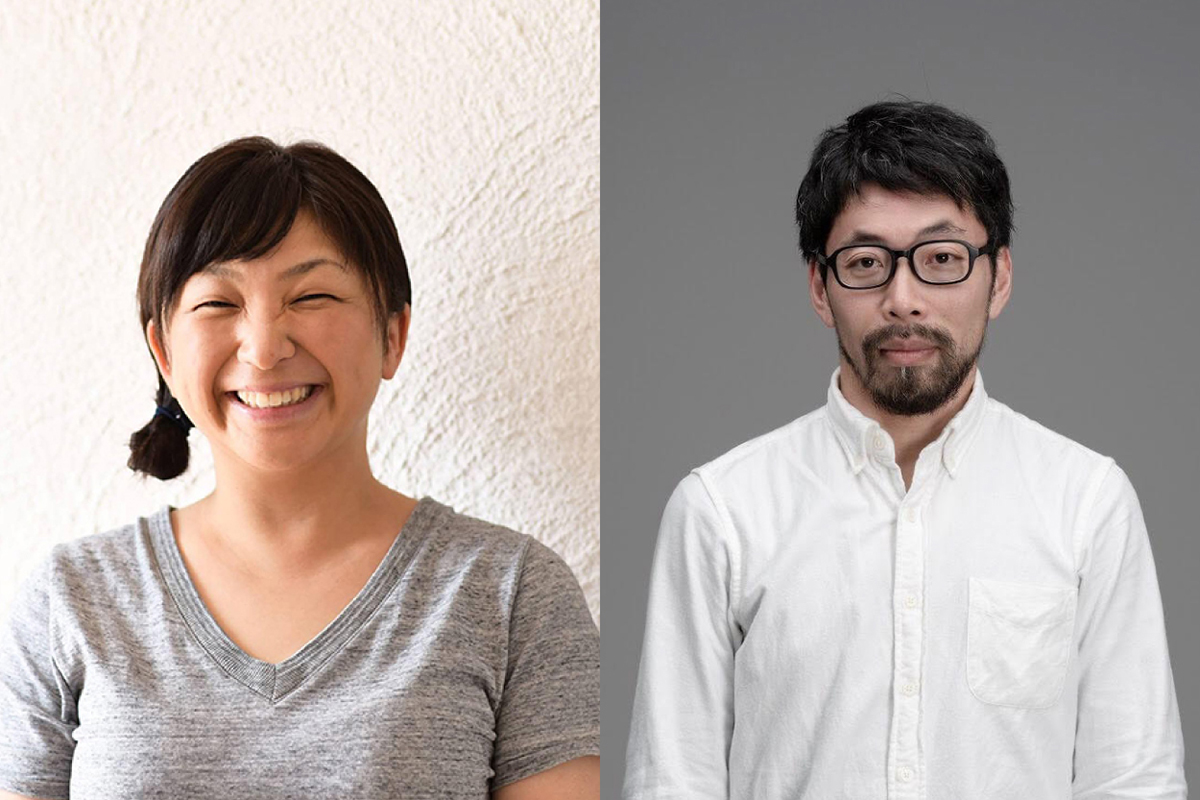
古川理沙
私立新留小学校設立準備財団共同代表、対話型カンファレンス「薩摩会議」を主催するNPO法人薩摩リーダーシップフォーラムSELF共同代表。韓国、中国、日本の大学や民間教育機関で教壇に立つとともに、カリキュラム開発や教科書執筆を行う。元ACTFL OPI Tester。ひより保育園、そらのまちほいくえん、日当山無垢食堂を運営し、「食とことば」を軸に子どもの学びと地域のリデザインに取り組んでいる。
Risa Furukawa
Co-Representative of the Newdome Elementary School Establishment Preparatory Foundation and Co-Representative of SELF (Satsuma Leadership Forum), an NPO that organizes the dialogue-based conference “Satsuma Conference.” He has taught at universities and private educational institutions in South Korea, China, and Japan, while also developing curricula and writing textbooks. A former ACTFL OPI Tester, he operates Hiyori Nursery School, Sora no Machi Nursery School, and Hiyatama Muku Shokudo, and works to redesign children’s learning and local communities through the themes of “food and language.”
水野大二郎
東京大学カレッジオブデザイン企画調整室教授。1979年東京生まれ。2008年Royal College of Art博士課程後期修了、芸術博士(ファッションデザイン)。京都大学デザインスクール特任講師、慶応義塾大学環境情報学部准教授、京都工芸繊維大学未来デザイン・工学機構教授を経て現職。デザインと社会の関係性を批評的に考察し架橋する多様なプロジェクトに携わる。
Daijiro Mizuno
Professor at the Planning and Coordination Office, College of Design, The University of Tokyo. Born in Tokyo in 1979. He completed his doctoral studies at the Royal College of Art in 2008 and received a Doctor of Arts degree in Fashion Design. Prior to his current position, he served as a Specially Appointed Lecturer at the Kyoto University Design School, Associate Professor at the Faculty of Environment and Information Studies, Keio University, and Professor at the Institute for Future Design and Engineering, Kyoto Institute of Technology. His work encompasses a diverse range of projects that critically examine and bridge the relationship between design and society.
11.15[Sun]14:00~15:30
セッション4「〈つくって終わり〉から〈場を育てる建築〉へ」
宮崎晃吉(建築家)× 瀬川翠(Studio Tokyo West Inc. 代表取締役、建築家)
建築を完成させることをゴールとするのではなく、その後の運営や関係性の中で場を育てていく実践が各地で生まれています。前橋市出身の宮崎晃吉は、現在東京・谷中で〈最小文化複合施設〉であるHAGISOを運営し、ローカルと向き合い、見立て、その魅力を掘り起こす実践を継続的に行っています。瀬川翠は、学生時代にシェアハウス《アンモナイツ》の運営を開始し、銭湯再生プロジェクトや、まちを舞台にしたウェディング事業の立ち上げなど、吉祥寺~西荻窪エリアで仲間との暮らしを起点にしながら、地域に根差した様々な取り組みを進め、自分たちのほしい暮らしや街のかたちを育て続けています。 セッション4では、建築を完成した〈モノ〉ではなく、人々の関係性やその土地の文化を育む〈プロセス〉として捉え直します。建築家はどのように場に関わり続けることができるのでしょうか。そして、小さな実践から生まれた場は、地域の文化やコミュニティをどのように育てていくのでしょうか。前橋で芽生えつつある様々な場の運営にも目を向けながら、建築と地域の新たな関係について考えます。
Dialogue Session 4
From “Built and Done” to Architecture That Nurtures a Sense of Place
Dialog: Mitsuyoshi Miyazaki (Architect) & Midori Segawa (Architect and Representative Director of Studio Tokyo West)
Instead of viewing the completion of a building as the ultimate goal, practices are emerging in various regions that focus on buildings that are cultivated through subsequent operations and the relationships that develop within them. Akiyoshi Miyazaki, a native of Maebashi, currently runs HAGISO, a “minimal cultural complex” in Yanaka, Tokyo, whose practice involves facing, interpreting and uncovering the unique charm of the local community by continuously engaging with it. Midori Segawa began managing the share house “Ammonites” while still a student. Since then, with communal living as their starting point, she and her peers have continued to envision and cultivate their own lifestyle and urban landscape through various community-rooted initiatives, including a public bath revitalization project and the launch of a community-based wedding business, in the Kichijoji–Nishi Ogikubo area.
In Session 4, we will reframe architecture not as a finished “object,” but as a “process” that nurtures human relationships and local culture. How can architects continue to engage with a place? And how do spaces born from small-scale initiatives foster local culture and community? While also examining the operations of various spaces that are starting to emerge in Maebashi, we will explore new relationships between architecture and local communities.

宮崎晃吉
群馬県前橋市生まれ。2008年東京藝術大学大学院修士課程修了後、磯崎新アトリエ勤務。
2011年より独立し建築設計やプロデュースを行うかたわら、2013年より、自社事業として東京・谷中を中心エリアとした築古のアパートや住宅をリノベーションした飲食、宿泊事業を設計および運営している。hanareで2018年グッドデザイン賞金賞受賞/ファイナリスト選出など。著書に顧彬彬と共著で「最小文化複合施設ーたまたま住んだ一軒のアパートからはじまる、東京・谷中の物語」など
瀬川翠
平成元年東京都生まれ。2014年にStudio Tokyo Westを設立。建築設計やブランディングの他、自社事業として、吉祥寺・西荻窪のシェアハウスを中心とした多拠点近接型コミュニティ「アンモナイツ」、吉祥寺のまちなかウェディングプロデュース事業「吉祥寺 de WEDDING」、飲食店「SOROR」「photon」を運営。事業経験を生かして20地域以上のエリアのマネジメントやブランディングに携わり、領域横断的な建築家の職能を探求している。2021年〜日本女子大学住居学科非常勤講師。
Akiyoshi Miyazaki
Born in Maebashi, Gunma Prefecture. After completing a master’s degree at the Graduate School of Fine Arts, Tokyo University of the Arts, in 2008, he worked at Arata Isozaki & Associates. He became independent in 2011, working in architectural design and production. Since 2013, he has also been designing and operating his own hospitality and food-and-beverage businesses in the Yanaka area of Tokyo, renovating old apartments and houses into restaurants and accommodations. His work on hanare received the Gold Award at the 2018 Good Design Award and was selected as a finalist. His publications include The Minimal Cultural Complex: A Story of Yanaka, Tokyo, Beginning with a Single Apartment I Happened to Live In, co-authored with Gu Binbin.
Midori Segawa
Born in Tokyo in 1989. She founded Studio Tokyo West in 2014. In addition to architectural design and branding, she operates several of her own businesses, including “Ammonites,” a multi-location, close-knit community centered around share houses in Kichijoji and Nishi-Ogikubo; “Kichijoji de WEDDING,” a town-based wedding production service in Kichijoji; and the restaurants “SOROR” and “photon.” Drawing on her experience in business development, she has been involved in area management and branding across more than 20 communities, exploring the cross-disciplinary role of architects. Since 2021, she has been a part-time lecturer in the Department of Housing and Architecture at Japan Women’s University.
11.28[Sat]14:00~15:10
セッション5「都市と地域の関係を編み直す文化施設のこれから」
レオナルド・バルトロメウス(YCAMキュレーター) × 聞き手:高橋由佳(アーツ前橋学芸員)
山口情報芸術センター(YCAM)のキュレーターであるバルトロメウスは、インドネシアを拠点に活動するアートコレクティブ・ルアンルパのメンバーとして培った経験をもとに、アート、教育、コミュニティ・エンゲージメントを横断した様々なプロジェクトを手掛けています。〈展覧会〉という形式にとらわれずに、様々な方法でアートと社会を接続するバルトロメウスの取り組みを手がかりに、日本の地方都市ならではのアートプロジェクトの在り方や、地域の文化施設のこれからの役割について考えます。
Dialogue Session 5 The Future of Cultural Facilities: Rethinking the Relationship between Cities and Regions
Leonardo Bartolomeus (Curator, YCAM) / Interviewer: Yuka Takahashi (Curator, Arts Maebashi)
Bartolomeus, a curator at the Yamaguchi Center for Arts and Media (YCAM), draws on his experience as a member of the Indonesia-based art collective Ruang Rupa to lead a variety of projects that span art, education, and community engagement. Taking as a hint Bartolomeus’s various initiatives to connect art and society outside of the traditional format of the “exhibition,” we will explore the state of art projects unique to Japan’s regional cities and the role of local cultural facilities going forward.

レオナルド・バルトロメウス
山口情報芸術センター(YCAM)のキュレーター。ジャカルタ芸術大学を卒業後、2019年に山口に移住するまでアート・コレクティヴ〈ルアンルパ(ruangrupa)〉(その後は「Gudskul Ekosistem」の一員)に所属。同コレクティブで活動する中で、アート、教育、コミュニティ・エンゲージメントの交差点に興味を持つようになり、「The Flavour of Power─紛争、政治、倫理、歴史を通して食をどう捉えるか?」(2022年)、「あそべる図書館— Speculative Library」(2023年)、「飯田街道聞き取りアートプロジェクト」(2024年)、「Dance Floor as Study Room —したたかにたゆたう 」(2024年)など多くのキュレーション・プロジェクトに取り組んできた。
Leonardo Bartolomeus
Curator at the Yamaguchi Center for Arts and Media (YCAM). After graduating from the Jakarta Institute of the Arts, she joined the art collective ruangrupa (later becoming a member of the Gudskul Ekosistem) and remained with the collective until moving to Yamaguchi in 2019. Through her work with the collective, she developed an interest in the intersection of art, education, and community engagement. She has since worked on numerous curatorial projects, including The Flavour of Power — How Do We Understand Food Through Conflict, Politics, Ethics, and History? (2022), A Playable Library — Speculative Library (2023), Iida Kaido Oral History Art Project (2024), and Dance Floor as Study Room — Sitataka ni Tayutau (2024).
12.6[Sun]14:00~15:30
セッション6「〈前橋の次の10年〉を描き育てる実践のかたちとは?」
藤村龍至(建築家・ソーシャルアーキテクト) × 辻琢磨(合同会社辻琢磨建築企画事務所代表/ 403architecture [dajiba])
建築や公共空間の設計に〈超線形設計プロセス〉論を導入し、そのプロセスを積極的に社会へ開いてきた藤村龍至は、埼玉県鳩山町では指定管理者として、さいたま市大宮駅東口では一般社団法人UDCOの理事として、公共施設や公共空間の管理運営を継続的にディレクションしています。また、台東区の上野中央通りや神戸市のポートアイランドでは、交通社会実験などを通じて、住民、企業、行政関係者を広く巻き込みながら、地域の公共空間や運営組織の将来像を提示し、段階的に実装する〈ソーシャル・アーキテクト〉としての活動を展開しています。 一方、静岡県浜松市を拠点とし、建築コレクティブ403architecture [dajiba]のメンバーでもある辻琢磨は、〈更新設計〉という顧問契約を導入し、個人住宅から浜松科学館といった公共施設まで、長期的な関係性の中で空間を少しずつ更新する建築実践に取り組むほか、国際芸術祭「あいち2025」のキュレーター(ラーニング)も務め、市民や参加者が主体的に関わりながら学びや活動を育てていく場づくりの企画・運営にも携わってきました。セッション6では、一度に完成形を目指すのではなく、変化に応答しながら段階的な実装や更新を重ねていく両者の実践を手がかりに、ハード面が整いつつある前橋の次の10年に向けて、この土地ならではの風景や関係性を、いかに育んでいけるのかを探ります。
Dialogue Session 6
Approaches towards Envisioning and Cultivating Maebashi over the Next Decade
Ryuji Fujimura (Architect / Social Architect) × Takuma Tsuji (Director, Tsuji Takuma Architectural Planning Office / 403architecture [dajiba])
Ryuji Fujimura has introduced the concept of the “Super Linear Design Process Theory” into the design of architecture and public spaces, while actively opening up the design process itself to society. Beyond design, he has continuously directed the management and operation of public facilities and public spaces, serving, for example, as the designated administrator of public facilities in Hatoyama New Town and as a director of the General Incorporated Association UDCO, which oversees the public spaces around the east exit of JR Omiya Station. In projects such as Ueno Chuo-dori in Tokyo and Kobe Port Island, he has worked as a Social Architect, presenting visions for the future of public spaces and their management organizations while implementing them in phases through initiatives such as transport-related social experiments involving a wide range of residents, businesses, and government agencies.
Meanwhile, Takuma Tsuji, based in Hamamatsu, Shizuoka Prefecture, and a member of the architectural collective 403architecture [dajiba], has introduced a consulting contract model called “Renewal Design.” Through this approach, he engages in architectural practices that gradually renew spaces over the course of long-term relationships, working on projects ranging from private residences to public facilities such as the Hamamatsu Science Museum. He has also served as a Learning Curator for Aichi Triennale 2025, where he has planned and managed programmes that enable citizens and participants to actively engage in and cultivate spaces for learning and collective activity.
Rather than aiming for a single completed form, both practitioners respond to change through phased implementation and continuous renewal. Drawing on their work, Session 6 explores how Maebashi—a city whose physical infrastructure is steadily taking shape—can cultivate landscapes and relationships unique to the city over the next decade.
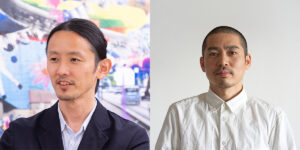
藤村龍至
建築家/東京藝術大学准教授。1976年東京生まれ。2005年よりRFA(藤村龍至建築設計事務所)主宰。2008年東京工業大学大学院博士課程退学。2016年より現職。2017年よりアーバンデザインセンター大宮(UDCO)ディレクター。主な建築作品に「すばる保育園」2018「十津川村災害対策本部拠点施設」2023ほか。主な著書に『批判的工学主義の建築~ソーシャル・アーキテクチャをめざして』2014『ちのかたち』2018など。
辻琢磨(写真:©goitami)
静岡県浜松市生まれ。横浜国立大学大学院建築都市スクールY-GSA修了後、2011年に橋本健史、彌田徹とともに建築コレクティブ403architecture [dajiba](以下403)を設立。2017年に個人事務所となる辻琢磨建築企画事務所を設立後は、403と並行し、建築の断続的でなめらかな変化をテーマに活動している。
Ryuji Fujimura
Architect / Associate Professor, Tokyo University of the Arts. Born in Tokyo in 1976. He has been the principal of RFA (Ryuji Fujimura Architects) since 2005. He left the doctoral program at the Tokyo Institute of Technology in 2008. He has held his current position since 2016. Since 2017, he has also served as Director of the Urban Design Center Omiya (UDCO). His major architectural works include Subaru Nursery School (2018) and Totsukawa Village Disaster Response Headquarters Facility (2023), among others. His major publications include Architecture of Critical Engineering: Toward Social Architecture (2014) and The Shape of the Land (2018).
Takuma Tsuji
Born in Hamamatsu, Shizuoka Prefecture. After completing the Yokohama National University Graduate School of Urban Innovation, Y-GSA, he founded the architectural collective 403architecture [dajiba] (hereafter, 403) in 2011 with Takeshi Hashimoto and Toru Iyoda. In 2017, he established his own practice, Takuma Tsuji Architectural Planning Office. Alongside his work with 403, he explores architecture through the theme of its continuous and fluid transformation.
12.19[Sat]14:00~15:30
セッション7「〈めぶく。Where good things grow.〉の次のビジョンを考える」
田中仁(本芸術祭総合プロデューサー/・JINS代表取締役会長CEO)× 宮本武典(本芸術祭プログラムディレクター・東京藝術大学准教授)× 高橋由佳(アーツ前橋学芸員)
建築・教育・文化施設・コミュニティなど、それぞれのローカルで新たな風景を生み出している実践者たちの活動を紐解きながら、前橋のまちづくりの未来について考える前橋国際芸術祭2026ダイアローグ・セッション。 最終セッションでは、これまでの6回の対話を振り返りながら、芸術祭全体を構想・牽引する田中仁と宮本武典が来場者の皆さんと「めぶく。」に続くまちづくりビジョンについて考える場をひらきます。ビエンナーレ形式で続いていく前橋国際芸術祭は今後、前橋市中心市街地にどのような変容をもたらしていくのでしょうか。2年後に開催される第二回、そして「次の10年」に向けた新たな道筋を探る本芸術祭のクロージングトークとなります。
Dialogue Session 7
Thoughts on the Next Phase beyond “Mebuku. Where good things grow.”
Jin Tanaka (General Producer, Maebashi Biennale 2026 / Chairman & CEO, JINS) × Takenori Miyamoto (Program Director, Maebashi Biennale 2026 / Associate Professor, Tokyo University of the Arts) × Yuka Takahashi (Curator, Arts Maebashi)
This dialogue session of Maebashi Biennale 2026 considers the future of urban development in Maebashi by tracing the work of practitioners who are creating new landscapes in their respective contexts, spanning architecture, education, cultural institutions, and community initiatives.
In this final session, Jin Tanaka and Takenori Miyamoto, who guided the festival and gave it its overall vision, will reflect on the six previous dialogues and initiate a discussion with attendees on possible efforts at city-making to come after Mebuku. As the festival continues in a biennial format, how might it transform Maebashi’s central district in the years ahead? In this closing talk, we explore possible new trajectories leading to the second edition in two years, and future editions over the next ten years.
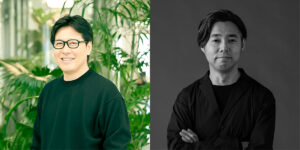
田中 仁
株式会社ジンズホールディングス代表取締役会長CEO。⼀般財団法⼈⽥中仁財団代表理事。1963年群⾺県⽣まれ。1988年有限会社ジェイアイエヌ(現:株式会社ジンズホールディングス)を設⽴し、2001年アイウエア事業「JINS」を開始。現在、東京証券取引所プライム市場上場。2014年群⾺県の地域活性化⽀援のため「⽥中仁財団」を設⽴し、起業家⽀援プロジェクト「群⾺イノベーションアワード」「群⾺イノベーションスクール」を開始。2020年には、廃旅館を再⽣して「⽩井屋ホテル」を開業し、衰退が危ぶまれた地⽅都市・前橋のまちづくりに尽⼒している。
Hitoshi Tanaka
Chairman and CEO of JINS Holdings Inc. and the Representative Director of the Hitoshi Tanaka Foundation. Born in 1963 in Gunma Prefecture, Hitoshi Tanaka founded JIN Co., Ltd. (now JINS Holdings Inc.) in 1988 and launched the eyewear brand JINS in 2001, which is currently listed on the Tokyo Stock Exchange Prime Market. In 2014, he established the Hitoshi Tanaka Foundation to support regional revitalization in Gunma, launching initiatives such as the Gunma Innovation Award and the Gunma Innovation School. In 2020, he renovated a shuttered inn and re-opened it as the Shiraiya Hotel, contributing to the urban renewal of Maebashi, a regional city facing decline.
Takenori Miyamoto
Curator and educator, Takenori Miyamoto is currently Associate Professor of Oil Painting in the Department of Painting, Tokyo University of the Arts and Chief Curator at Arts Maebashi. Born in Nara in 1974, he lived in France as a recipient of the Musashino Art University Paris Prize. He later worked in the curatorial department at the Hara Museum of Contemporary Art before joining Tohoku University of Art & Design in 2005. He served there until March 2019 as Professor and Chief Curator, overseeing art projects in the Tohoku region, as well as recovery support initiatives following the Great East Japan Earthquake. In 2014, he launched the Yamagata Biennale and served as its director for three iterations (until 2018). His recent curations include: Kengo Kuma: The Birth of an Art Space Connected to Nature – Transcendent Architecture in Stone and Wood (2020, Kadokawa Musashino Museum); New born ARAI Ryoji (2023–2025, Yokosuka Museum of Art and others); It’s Alright To Be Here — writtenafterwards /The Possibility of Fashion Written with Yoshikazu Yamagata (2024, Arts Maebashi); Atsushi Suwa Solo Exhibition: You Are Beautiful (2025–2026, WHAT MUSEUM); and Tomoko Mukaiyama: Act of Fire (2026, Arts Maebashi).